
About Garry Wendell
Garry Wendell (GW) is an author, educator, and lifelong student of one powerful question: Why do some people turn opportunity into progress while others struggle to move forward?
His search for the answer began with his own life.
After the Northridge earthquake disrupted his family’s life in Southern California, GW and his wife packed what they could into a small Toyota. They drove nearly 3,000 miles to Atlanta to begin again. There, he noticed something that changed the way he thought about money. Many of his old friends weren’t simply talking about earning more—they were talking about homeownership, business, wealth, and control of their time.
GW became fascinated by the difference between making money and building wealth.
That curiosity eventually led him into the mortgage industry, where he and his wife conducted home-buying workshops and helped others understand the path to homeownership. But the more people they taught, the more GW noticed a deeper problem: many adults were learning important financial lessons far too late—and parents were asking, “Why didn’t anyone teach us this when we were young?”
That question helped inspire Kidz 4 Money and years of financial education for young people and families, since 2003. Along the way, GW’s focus expanded beyond traditional financial literacy. He became increasingly interested in the psychology behind our choices—the influence of habits, emotions, identity, environment, self-awareness, and mindset on the decisions that shape our lives.
Today, those ideas are at the heart of his writing and teaching.
Through projects including ‘Psychology of Money, Wealth & You’, ‘Pause: The Art of Self-Awareness ', and the 4th Quarter Life website, GW explores a common theme:
A Better Life follows Better Thinking
GW’s work encourages a balance of individual and collective wealth development in all one’s financial endeavors, driven by keen self-awareness and a commitment to harmonious communities. He focuses on unity and harmony for all, beginning in the African diaspora and disenfranchised communities.
GW doesn’t approach these subjects as someone with all the answers. Much of what he teaches grew out of life lessons, deep learning practices, second thoughts, and extensive experiences.
Perhaps that is the point.
He believes education should do more than teach our youth what to think; it should teach them how to think and to think for themselves. “We have to move toward absolute meritocracy, where we can all bring our humble best to the table to govern our future. We’ve misused and misunderstood our diversity, punishing it as a problem; I believe our diversity is not a problem but a power. It should build on the unique self of every individual, with a focus on unity and harmonious prosperity.”
His philosophy is simple: Your greatest asset isn’t just your money, education, age, or experience. It’s your ability to understand yourself, think critically, and use what unique energies one has to create value—for yourself and for others. “Your uniqueness is your value at the table and what makes you—you.”
Books Written by Garry

Psychology of Money, Wealth & You
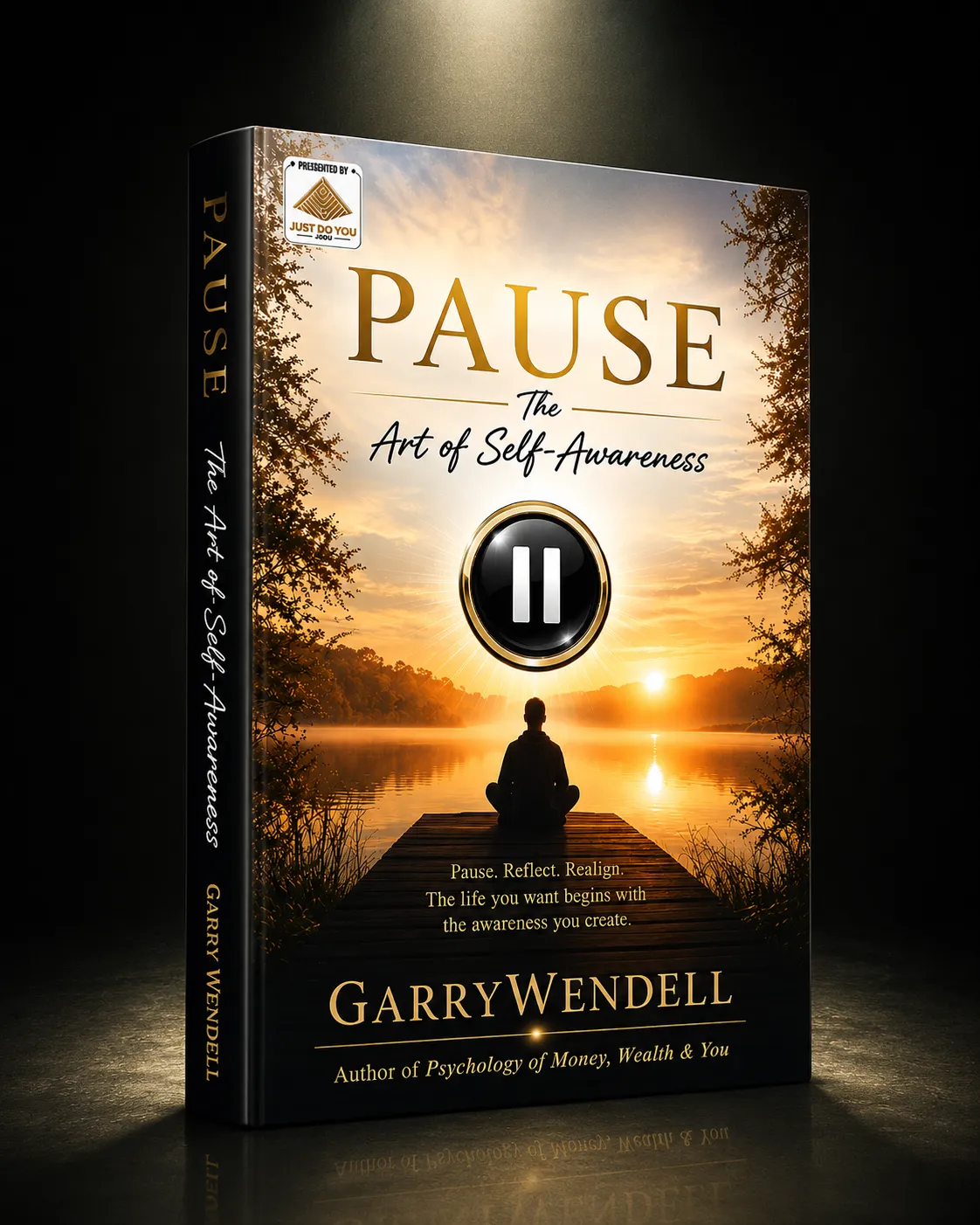
Pause: The Art of Self-Awareness
Latest Article by Garry

Financial Literacy
From Financial Literacy to a Mindset of Wealth
When I first became interested in teaching young people about money, I believed the answer was financial literacy—teaching them how to budget, save, use credit, manage a bank account, and avoid unnecessary debt. But I eventually realized that knowing about money and knowing what to do with money are two different things. Financial decisions are not made by calculators; they are made by people influenced by emotions, habits, fears, confidence, insecurity, family, peer pressure, dreams, and judgment. Therefore, financial education must address not only money but also the person using it.
Traditional financial literacy focuses mainly on the mechanics of money: earning, banking, saving, budgeting, borrowing, credit, and expenses. However, real-life financial decisions involve much more. A teenager deciding whether to spend $100 on sneakers may be dealing with self-control, peer pressure, identity, self-esteem, and purpose. This shows why simply teaching financial skills is not enough. Young people also need self-awareness and the ability to understand the reasons behind their financial decisions.
Another important lesson is that money has a destination. Saving money is useful, but young people should also understand what they are saving for and what they want their money to accomplish. That destination can be wealth—not simply mansions or millions, but resources that provide choices, security, opportunity, and greater control over time. Money is something you have; wealth is something you build. Wealth can be built through a career and investing, entrepreneurship, real estate, valuable skills, intellectual property, or multiple income streams. There is no single formula for building wealth.
This understanding led to the idea of a Mindset of Wealth: teaching young people not only what to do with money, but how to think about money, themselves, and their future. Financial lessons such as saving, budgeting, credit, investing, and financial responsibility should be connected to self-awareness, critical thinking, creativity, entrepreneurship, emotional intelligence, discipline, and decision-making. Instead of asking, “How much money do I have?” young people should ask, “What can this money help me build?” Instead of “Can I afford this?” they should ask, “Does buying this move me closer to or farther away from what I really want?”
Ultimately, you are part of the equation. Two young people can receive the same financial lesson and make completely different decisions because they have different personalities, experiences, talents, pressures, and dreams. Those differences can become their greatest advantages. Creativity, technical ability, cooking, artwork, or problem-solving can all become opportunities to create value and build wealth. As the writer puts it, “Your value at the table is your difference at the table.” The goal is not simply to become a better consumer in the financial system, but to understand the system—and yourself—well enough to build the life you actually want. The most important part of your financial future is not your bank account; it is the person making the decisions.
Ebooks Written by Garry
The Wealth Mindset Shift
Purpose in Retirement
Let's Create a Life of Purpose, Growth & Legacy
Together we can make the fourth quarter your greatest chapter yet.
FOLLOW US


EXPLORE
Turning a lifetime of wisdom into guidance for the next generation
Copyright 2026 The Fourth Quarter Life
All Rights Reserved.