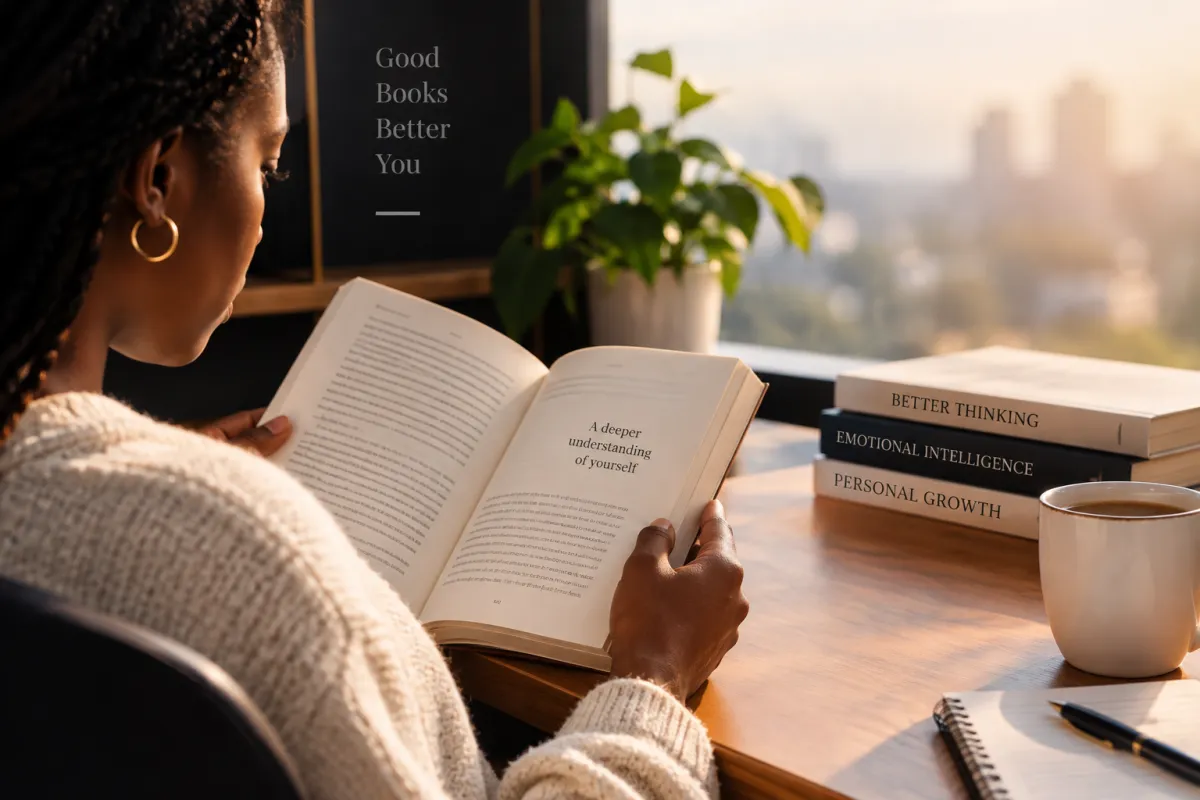
How Reading Increases Self Awareness
How Reading Increases Self-Awareness
Books do more than widen our knowledge. They give us the distance, language, and quiet needed to see ourselves more clearly.
BY GARRY WENDELL
Most people think reading is about learning new information. While books certainly teach us facts, history, science, and ideas, their greatest gift may be something much more personal: they help us understand ourselves.
Every time you open a book, you step into someone else’s world. You see life through another person’s eyes, experience their struggles, celebrate their victories, and witness the consequences of their decisions. Along the way, something unexpected happens. You begin comparing their story to your own. You ask yourself questions like: Would I have made that choice? Why did that character react that way? Have I ever felt the same emotions? Without realizing it, the book becomes a mirror, reflecting pieces of your own life.
Pause: Video often moves quickly from one subject to the next to hold your attention. Reading gives you room to examine your own thoughts before the next idea arrives.
The Safe Distance of a Story
One of the most powerful ways reading builds self-awareness is by encouraging self-reflection. Instead of examining yourself directly, you first examine a character’s thoughts, behaviors, and motivations. This creates a safe emotional distance. It’s often easier to recognize fear, pride, insecurity, or courage in someone else before recognizing those same qualities in ourselves. As you identify with different characters, you begin noticing your own beliefs, habits, strengths, and weaknesses.
Reading also helps you understand other people, and that naturally leads to a better understanding of yourself. Every person you meet has different experiences, values, fears, and goals. Great stories invite us inside those different perspectives. They remind us that people often behave the way they do for reasons we cannot immediately see. As our understanding of others grows, so does our awareness of our own reactions, assumptions, and judgments. Sometimes the greatest lesson from a book isn’t learning why a character acted a certain way—it’s realizing why you would have reacted differently.
A Pause in the Noise
Another reason reading increases self-awareness is that it slows your mind down. Much of modern life happens on autopilot. We scroll through social media, react to notifications, answer messages, and move from one distraction to another without giving ourselves much time to think. Reading requires something different. It asks us to focus, imagine, connect ideas, and remain present. In many ways, reading creates a pause between life’s constant noise and our next thought. That pause is where self-awareness begins to grow.
Rehearsing Life Through Books
Books also let us experience situations we may never encounter. Through stories, we can feel the emotions of someone living in poverty, leading a nation, surviving a war, starting a business, overcoming addiction, or rebuilding after failure. Although these experiences belong to fictional or historical characters, our brains mentally rehearse them. We begin asking ourselves: What would I have done? How would I respond? What kind of person do I want to become? Reading lets us learn life’s lessons without experiencing every hardship firsthand.
Challenging the Beliefs We Inherit
Perhaps one of the most valuable gifts books provide is the ability to challenge our assumptions. Many of us carry beliefs we never consciously chose. We inherit ideas from our families, friends, schools, communities, culture, and social media. Often we don’t even realize those beliefs exist until a book presents a different perspective. Suddenly, we find ourselves questioning opinions we once accepted without thought. That moment of questioning is not weakness—it is growth. Self-awareness often begins the moment we realize that our beliefs deserve examination.
Finding Words for What We Feel
Reading also expands our emotional vocabulary. Many people know they’re upset but struggle to explain exactly what they’re feeling. Are they disappointed, embarrassed, frustrated, anxious, ashamed, lonely, or discouraged? Books expose us to a wide range of human emotions and teach us language to describe them. The better we become at naming our emotions, the better we become at understanding them. When we can identify what we’re feeling, we’re far more likely to make thoughtful decisions instead of impulsive ones.
Reflection Turns Reading Into Growth
Simply reading books does not automatically make someone more self-aware. Two people can read the same book and walk away with completely different experiences. One person may finish the story and move on. Another may stop to reflect on the lessons, examine their own beliefs, and apply those insights to everyday life. The difference is reflection. Reading plants the seed, but reflection allows it to grow.
This is where the Pause becomes so important. After every meaningful chapter, powerful story, or thoughtprovoking idea, give yourself a moment to ask:
• What does this teach me about myself?
• Which character do I relate to—and why?
• What belief of mine was challenged?
• How will this influence my next decision?
Those questions transform reading from an activity into a tool for personal growth.
The 4QL Lens
Critical thinking strengthens this process by helping us evaluate the ideas we encounter. It asks whether an author’s arguments are supported by evidence and whether our own beliefs stand up to careful examination. Creative thinking expands the process by asking what other possibilities might exist beyond those presented in the book. Diunital thinking adds one final layer. Instead of asking only which idea is right, it asks how seemingly opposite ideas might work together. It encourages us to look beyond conflict and discover relationships, balance, and deeper understanding.
A great book doesn’t simply fill your mind with information. It changes the way you see yourself.
A Final Reflection
Every page becomes an opportunity to question, reflect, grow, and become more intentional. In the end, reading is not just about discovering new ideas. It is about discovering the person who is doing the reading. Every story, biography, or idea invites you to compare another person’s experiences, choices, and beliefs with your own. In that process, you begin to recognize your strengths, question your assumptions, identify your blind spots, and better understand your emotions and motivations. Knowledge can fill your head; selfawareness can change your life because it influences the choices you make every day. When you pause to ask, “What does this teach me about myself?” reading becomes more than an educational activity. It becomes a tool for personal growth, wiser choices, and intentional living. The greatest books don’t simply tell you about the world; they help you discover the person you are becoming.
Key Takeaway
Every book is both a window and a mirror. It is a window into someone else’s world, but if you pause long enough to reflect, it becomes a mirror that reveals your own.
